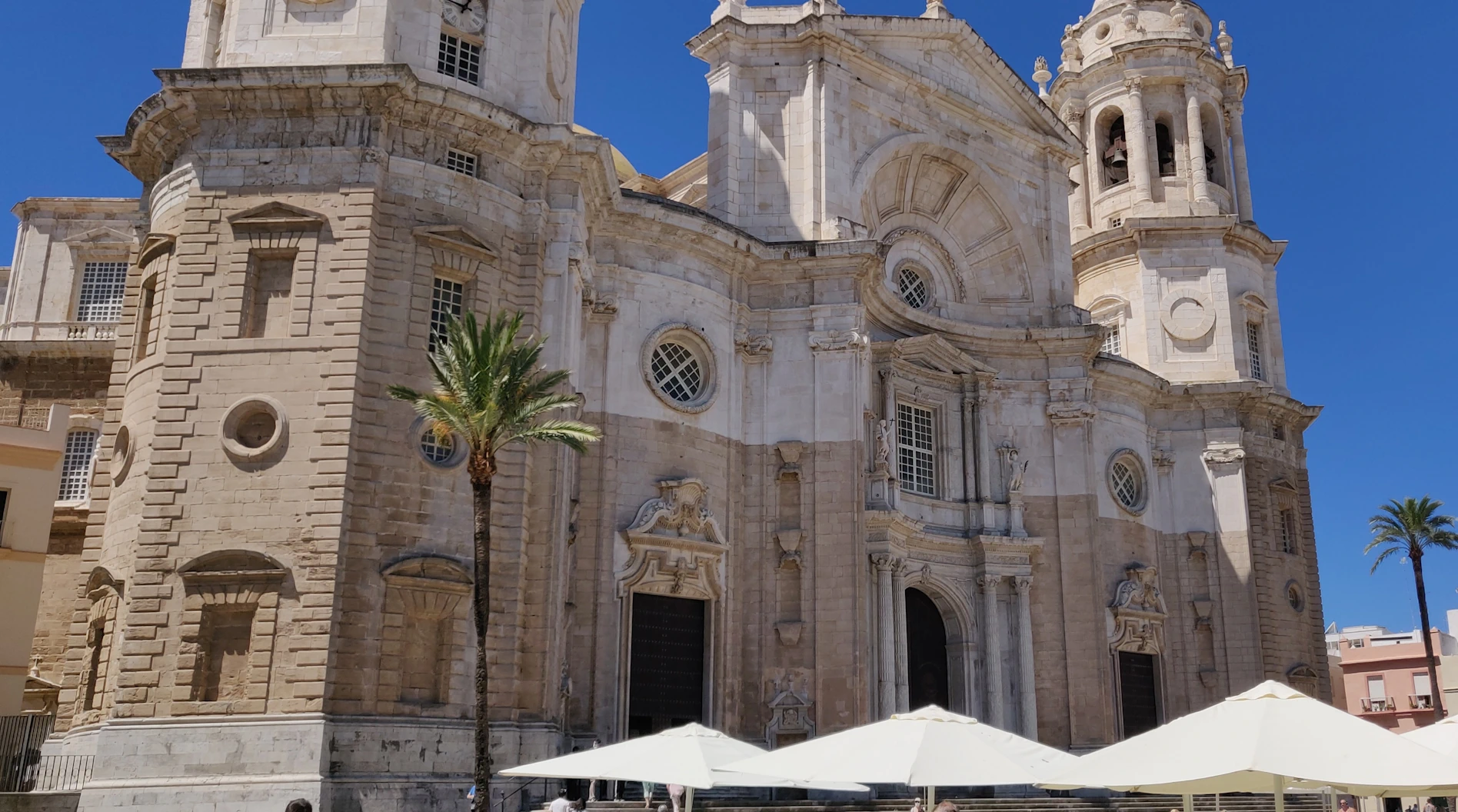
Historic Cádiz: A Stroll Through the Cradle of Liberty
We explore the historic center of Cádiz, from the iconic Plaza de San Antonio to the grand Monumento a las Cortes, discovering charming squares and the rich heritage of the Provincial Museum.
Plaza San Antonio: The City’s Drawing Room
Plaza de San Antonio is one of the most emblematic and oldest public spaces in Cádiz, emerging in the 17th century outside the city walls. Surrounded by noble buildings and the Church of San Antonio, it was traditionally the meeting place for the commercial bourgeoisie and the stage for important royal proclamations. Its current design, with gardens and a central fountain, dates from the 19th century.
Mid-morning in July, the square was bathed in intense sunlight mitigated by the sea breeze. The café terraces were starting to fill up. I sat for a moment by the fountain, watching the comings and goings of the gaditanos under the palm and orange trees. The atmosphere was calm, perfect for contemplating the white and yellow façades of the buildings surrounding this city “drawing room.”
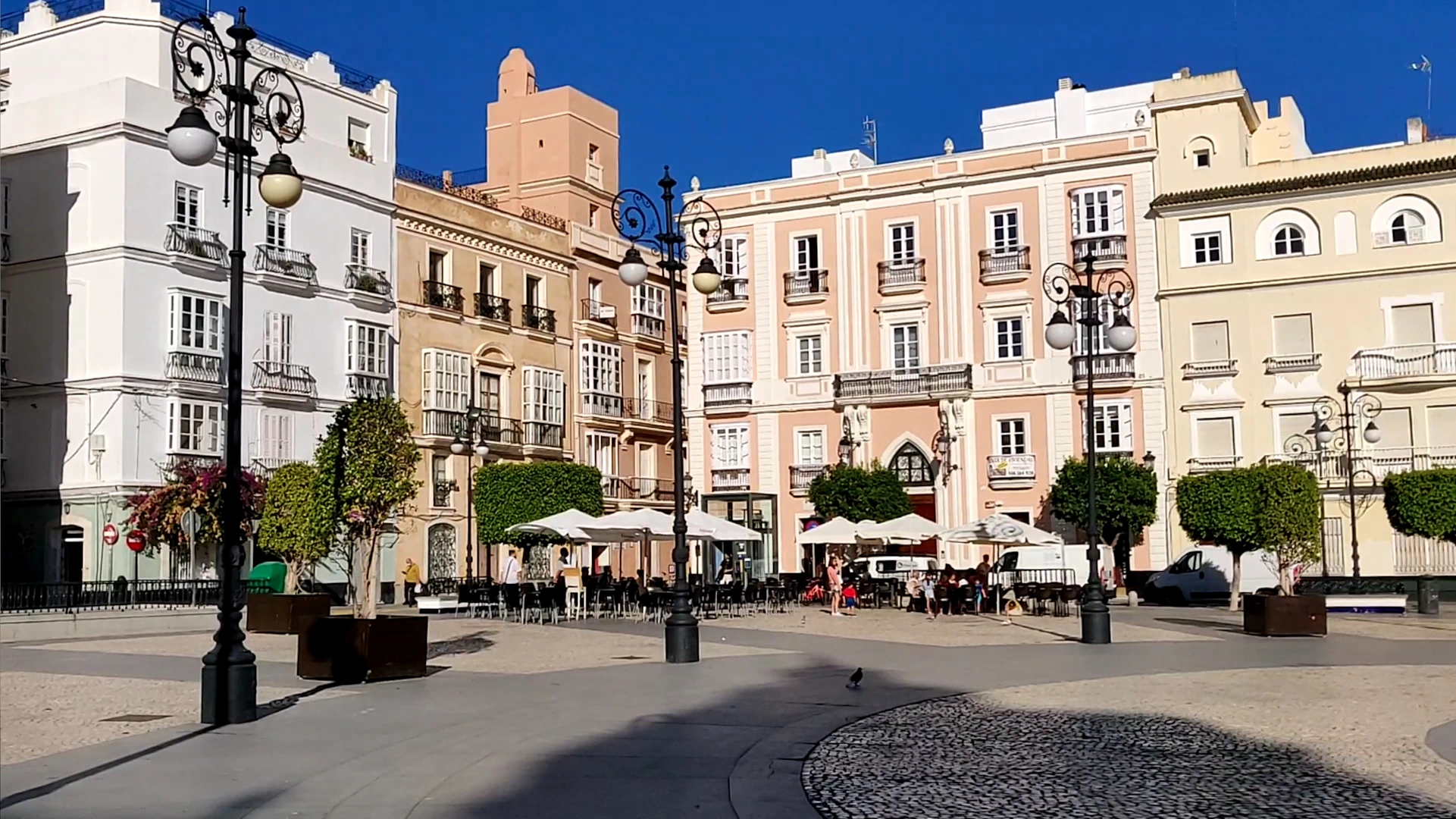
Plaza de la Mina: Neoclassical Heart
Plaza de la Mina owes its name to an old minefield that existed there during the English siege of 1596. Its current configuration, a wide rectangular porticoed space, is due to the 19th-century urban reform. It is flanked by important institutions like the Museo de Cádiz and the Faculty of Medicine, being a notable example of Neoclassicism in the city.
Walking under the square’s arcades was a relief from the heat. The atmosphere was more bustling, with students and tourists crossing from one side to the other. The spaciousness of the area and the uniformity of its architecture, with its three floors and wrought-iron balconies, convey great elegance. It is a place that invites a leisurely stroll, enjoying its symmetry and shade.
Museum of Cádiz: A Journey Through Time
The Museum of Cádiz, located in Plaza de la Mina, occupies the building of the old Museo de Bellas Artes, built in 1838. Its collections are organized into three main sections: Archaeology, with Phoenician and Roman finds; Fine Arts, with a notable collection of Spanish Baroque painting; and Ethnology. Its star pieces are the Phoenician sarcophagi of a man and a woman.
Entering the museum was like immersing oneself in the layers of Cádiz’s history. The archaeology floor, cool and silent, is fascinating. Stopping in front of the 5th-century B.C. Phoenician sarcophagi, found in the city itself, evokes a strange feeling of connection with its earliest inhabitants. The painting rooms, with works by Zurbarán and Murillo, offer a sublime contrast of light and devotion.
Monument to the Constitution of 1812: Tribute to La Pepa
The Monument to the Courts of 1812, popularly known as the Monument to the Constitution of 1812 or “La Pepa,” was erected in 1912 to commemorate the first centenary of the historic Spanish Constitution promulgated in Cádiz. The work of architect Modesto López Otero and sculptor Aniceto Marinas, it is Neoclassical in style and symbolizes the values of liberty, justice, and citizenship.
From afar, the monument dominates the square with its imposing semicircular colonnade and its tall central tower. As I approached, I could appreciate the details of the sculptures representing War, Peace, Agriculture, and Industry. Reading the names of the doceañista deputies inscribed on the hemicycle is an exercise in historical memory. It is a place that emanates solemnity and civic pride.
Plaza España: A Space of Memory and Encounter
Plaza de España is a large open esplanade created at the beginning of the 20th century as an urban setting for the Monument to the Cortes. With a simple and wide design, featuring gardens and benches, it has become a place for strolling, commemorative events, and relaxation for gaditanos and visitors. It offers frontal views of the majestic monument and is surrounded by official buildings and hotels.
At the end of the walk, Plaza de España appeared wide and bright. Families were strolling, children were running around, and groups of friends were gathering on the shaded benches. I sat down facing the monument, with the murmur of the fountain in the background, and mentally reviewed the path taken. This open space, dedicated to the memory of liberty, was the perfect finale for a stroll through constitutional Cádiz.